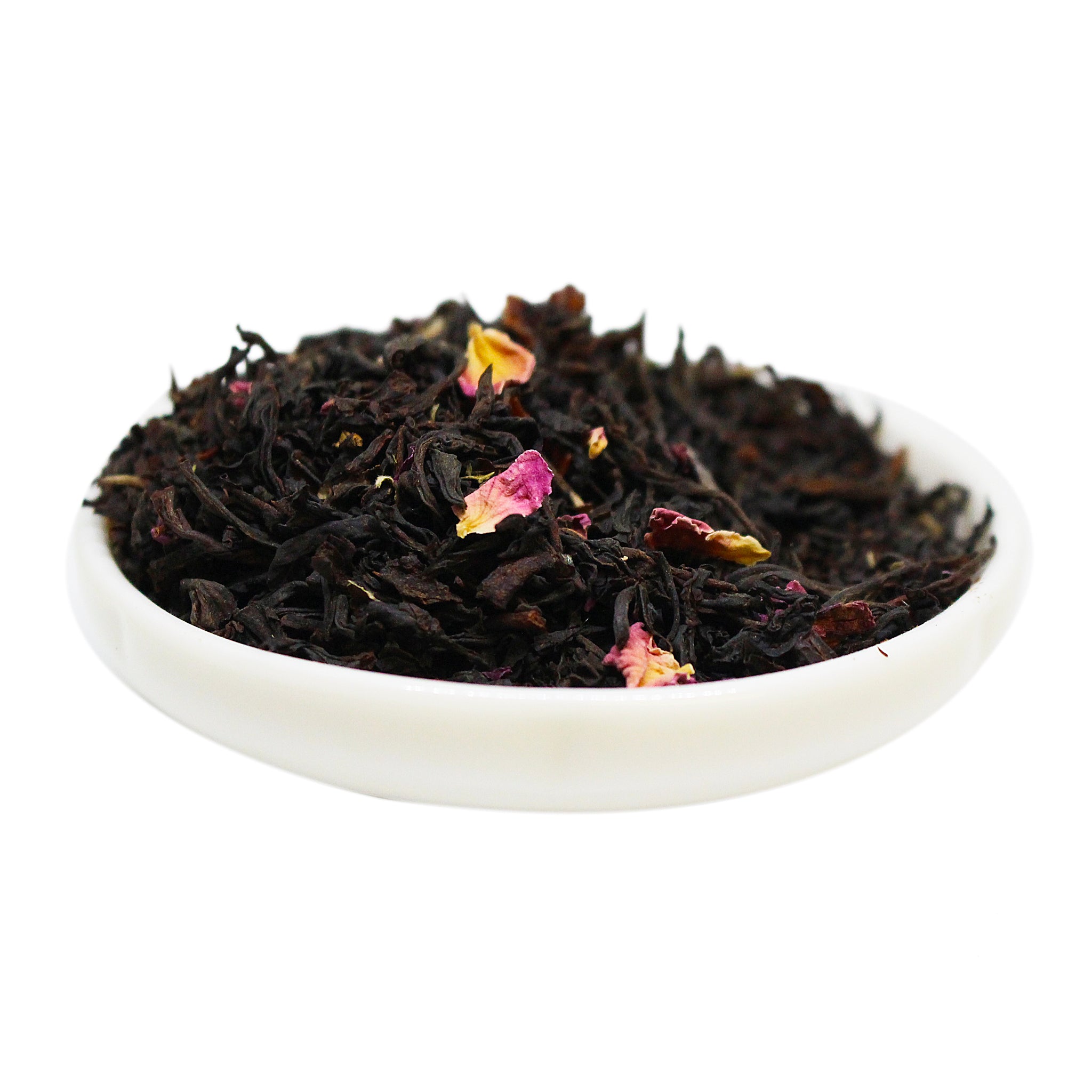
Black Rose — Floral Black Tea for Skin and Vitality
Black Rose combines high-grown Sri Lankan black tea with fragrant rose petals for a smooth, aromatic cup. The richness of black tea is balanced by soft floral notes, creating a tea that feels both full-bodied and refreshing.
Rose has long been valued in traditional herbal practices for its association with skin health and overall vitality, while black tea provides a steady lift of energy.
Best time to drink: morning or afternoon
Use it when: you want a flavorful black tea with a softer, floral profile
Flavor Profile
Full-bodied black tea with delicate rose floral notes.
Caffeine
High — energizing and steady.
Grade
OP (Orange Pekoe)
Origin
Sri Lanka
How to Brew
1 tsp per 8 oz water
212°F for 5 minutes
Why people choose it
• balanced floral black tea
• smooth alternative to stronger black teas
• rose traditionally associated with skin vitality and wellness
Youthful Skin | High Vitamin C | Detox
UCLA researchers have shown that black tea alters energy metabolism in the liver and promotes weight loss by changing gut metabolites. Published in the European Journal of Nutrition, the study found that black tea changed the ratio of intestinal bacteria; the percentage of bacteria in the intestinal track associated with obesity decreased, while bacteria associated with lean body mass increased.
Previous studies indicated that chemicals in green tea called polyphenols are absorbed and alter the energy metabolism in the liver. The new findings show that black tea polyphenols, which are too large to be absorbed in the small intestine, stimulate the growth of gut bacterium and the formation of short-chain fatty acids, a type of bacterial metabolites that has been shown to alter the energy metabolism in the liver.
Our new findings suggest that black tea, through a specific mechanism through the gut microbiome, may also contribute to good health and weight loss in humans, Susanne Henning, one of the researchers in the study.